
Preparedness by Europeans − Taking
action in a new reality
Europe faces a new reality. This message, whether it is coming from Helsinki, Stockholm,
Brussels, Paris, or Madrid, raises the question of how this reality should best be met. Looking at new European Union strategies and public support for a common defence and security policy, this chapter explores the future of European preparedness. By considering several perspectives, namely what the EU envisions, what Europeans want according to surveys, and what member states are hesitant about, we outline some of the major challenges and visions for a better prepared Europe.
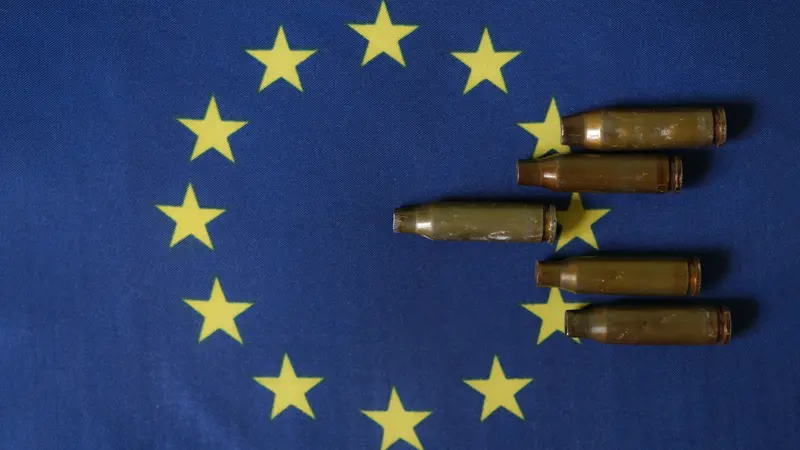
Photo: Shutterstock
Amid Russia’s full-scale invasion of Ukraine as well as transatlantic turmoil with the second Trump administration, Europe faces a new reality and will be forced to strengthen its capacities. The EU Defence Commissioner Andrius Kubilius has even called for a standing EU military force of 100,000 troops and reforms of EU defence governance. While this may be complicated in practice, the bold proposal reflects the sense of a new and threatening reality for European security.
Moreover, recent events come against an already challenging threat landscape of climate-induced risk, pandemics, economic warfare, disinformation, and potentially dangerous technologies. As concluded by the EU Preparedness Union Strategy, the new reality facing Europe is marked by growing risks and deep uncertainty, thus highlighting the added value of the EU’s broad toolbox. To some extent, the repeated lists of threats and corresponding key actions of new strategies tell us something about this new reality.
This chapter explores the core motivations and main proposals that have been put forward regarding a strengthened European preparedness. It begins by considering an important report on European preparedness (informing the EU Preparedness Union Strategy), then turns to what surveys say Europeans want, and concludes with reflections on the way forward for European resilience.
Why, according to Niinistö
When, in early 2024, Ursula von der Leyen, President of the European Commission, asked the former Finnish President Sauli Niinistö to write a report on how to enhance Europe’s preparedness and readiness, she cited Niinistö’s own words: “Europe has to wake up.” Stating moreover that she wholeheartedly agreed with Niinistö, von der Leyen argued that Europe has a lot to learn from Finland, where defence preparedness is not just the military’s concern, but everyone’s concern. Exploring this whole-of-society approach to preparedness and how it could be adopted at the European level became an important aim of the resulting Niinistö report (Safer Together, hereafter the Niinistö Report), which was released in October 2024. The report also made an effort to explain why Europe has to wake up.
Beyond its lists of new risks and threats, several more profound reasons can be discerned from the Niinistö Report, and these have since reappeared in several EU strategies on defence, security, and preparedness. Based on our reading and analysis of these documents, we identify and summarise three reasons why Europe needs to strengthen its preparedness: First, Niinistö underscores that the crises of recent years have not been transitory or isolated. Instead, they “reflect deeper fault lines that severely undermine the fundamentals of the international rules-based order, as well as our planet’s biosphere.” EU strategies on security and defence similarly refer to paradigm shifts, broader trends, and strategic challenges, sometimes specified in terms of geopolitical, climatic/ecological, and technological shifts. The conclusion is clear: Europeans need to be prepared for a prolonged period of high risk.
Second, considering the strategic challenges facing Europe and the interdependency among EU member states, the Niinistö Report calls for a better use of economies of scale and joint planning. Subsequent EU strategies similarly emphasise the importance of a unified approach, arguing that fragmented and reactive responses are not enough in an increasingly dangerous and fast-moving world. Third, the goal of a strengthened European civilian and military preparedness is not to wage war, but to maintain peace. Preparedness is described as a key component of deterrence against malicious actors. Admittedly, as Niinistö notes, deterrence is not how the EU has traditionally defined its role in security. However,
given the evolving threat landscape, the EU now needs to make it as difficult as possible for aggressors to achieve their objectives, preferably deterring them from acting in the first place.
In addition to these three focal points, strategy, unity, and deterrence, Niinistö also argues that we must be better prepared “not only to survive, but also to thrive in this new reality.” Focusing in this context on Europeans rather than the EU per se, Niinistö concludes that preparedness is the opposite of pessimism and hopelessness, and that it concerns everyone.
What do Europeans want?
According to Eurobarometer surveys (the public opinion surveys carried out twice a year on behalf of the EU institutions in all member states), public support for the EU reached record levels in 2025. The surveys also indicate that the protection of peace and security is the top reason membership is viewed positively. Tellingly, around 80 per cent of respondents support a common defence and security policy at EU level, and around 90 per cent want the EU to act in a more united way to face global challenges.
At the same time, the continent is experiencing a countervailing dynamic of Euroscepticism, represented in particular by populist and far-right parties in the new composition of the European Parliament and government leadership in some member states, as well as right-wing political challengers in France and
Germany. These trends have weakened the engine for European integration and capacity for action, reflecting the importance of the domestic political situation in major member states.
Meanwhile, member states also differ in their preferences and focus regarding threats and preparedness. As for civil-military cooperation (inspired by Nordic models of comprehensive or total defence), Sweden is part of a driving coalition together with Belgium, Denmark, the Netherlands, Luxembourg, Finland, Estonia, Latvia, Lithuania, and Poland. However, pushing this agenda forward
has faced resistance from countries in Central and Southern Europe, including France, Italy, and Slovenia. For some member states, expanding current mechanisms for civil protection, which in the EU context refers to prevention and assistance during crises, to include an all-hazards perspective and civil-military cooperation is sensitive, due to national preparedness cultures, information sharing, and administrative systems.
In addition, the Eurobarometer polls quoted by Niinistö (conducted in 2024) indicate that EU citizens are calling for the Union to become a stronger actor in defence. For example, two-thirds of respondents agreed that the EU should spend more money on defence. The path towards such increased strength has been the topic of much recent strategic analysis, and constitutes the core subject of the EU
Preparedness Union Strategy released in 2025.
Towards a European preparedness union
The EU Preparedness Union Strategy that followed the Niinistö Report reflects a further deepening of integration in this field. The strategy sets out 30 key actions for member states to increase preparedness for crises such as natural disasters and hybrid and military threats. One example relates to the ambition to boost the EU’s material preparedness for crises, as outlined in a subsequent EU stockpiling strategy (released in 2025).
An array of initiatives has also been pursued in the defence field at the EU level. Plans are underway for an ‘internal market for defence’ with nine so-called capability coalitions. In addition, the Commission has proposed four flagship projects: the European Drone Defence Initiative (EDDI), Eastern Flank Watch,
European Air Shield, and European Space Shield. The Commission’s proposal on military mobility, designed to facilitate the transfer of troops across the continent, was presented in November 2025.
These priorities at the EU level go hand in hand with NATO’s increased focus on resilience and civil-military cooperation. For example, the EU has tools that can assist cooperation between member states in achieving their NATO objectives, building on the EU’s regulatory powers and economy of scale. However, while coordination between the EU and NATO is of great importance, it can be complicated in practice. One example is the lack of a sufficient mandate for consultations between the organisations’ secretariats. When it comes to military planning, some have floated the idea of a European pillar within NATO, while others mention other formats, including partnership with the UK or a Nordic–Baltic format.
Looking back, much has happened in only a few years, and no one can doubt the commitment of the European Commission to the vision of the Preparedness Union. Yet, the challenges ahead are neither few nor small. While defence experts and strategists may be wide awake, Niinistö warns that real, joint action may still be hampered by short-termism and diverging interests.
There is also the question of trust. As Niinistö recognises, moving towards a stronger role for the EU in the context of preparedness and defence will require “a high level of trust – between the Member States and EU institutions, and between public authorities, the private sector, and civil society.” Given the stakes, are European leaders ready for this kind of trust?
The seriousness of the situation has been further underscored by former European Central Bank President Mario Draghi, author of the Draghi report on EU competitiveness. In a speech in Leuven in February 2026, he warned that the collapse of the current economic world order may lead to Europe becoming “subordinated, divided, and deindustrialised at once.” Notably, Draghi compared the EU’s global economic power to its weaker role in security and defence: “Where Europe has federated on trade, on competition, on the single market, on monetary policy, we are respected as a power and negotiate as one [...] Where we have not, on defence, on industrial policy, on foreign affairs, we are treated as a loose assembly of middle-sized states to be divided and dealt with accordingly.”
While not everyone would agree with Draghi that Europe needs to move towards a federation, leaders realise what is at stake: our democracy, freedom, and prosperity.
Conclusion and the way forward
No matter what happens on the global stage, Europe and Europeans will be forced to take more responsibility for their own security, a task that the EU is in many ways well-positioned to take on. The EU has extensive means to support member state capabilities through joint legislation, coordination, and financing, including in areas important for modern-day preparedness such as AI, cyber, hybrid threats, disinformation, economic warfare, critical infrastructure, climate adaptation, research, and innovation, as well as joint industrial policy for the defence sector. The financial muscles of the EU allow for joint procurement and spending. The EU’s global role as a trading partner and single market should also
not be forgotten in this regard.
To make these technical and economic mechanisms work, cultural and social dimensions also need to be considered. This is why the Niinistö Report discusses at length matters of trust, preparedness culture, and the need for a new mindset. President von der Leyen already appears to have realised the challenges of this endeavour when embarking on her first Commission term in 2019, stating that “if
we are to go down the European path, we must first rediscover our unity.” Ending on a hopeful note, as European leaders tend to do, von der Leyen also expressed her belief that if we close the gaps between us, we can turn today’s challenges into tomorrow’s opportunities.
This article is written by researchers Jenny Ingemarsdotter and Louise Bengtsson, as part of the report Strategic Outlook 11: Wide Awake in a World of Disorder. The report examines how geopolitical tensions, economic uncertainty, and rapid technological change are reshaping the international system and challenging established patterns of cooperation. It explores key security, economic, societal, military, and technological developments emerging in an era of strategic rivalry and systemic competition.