
Russia's military engagement in Africa
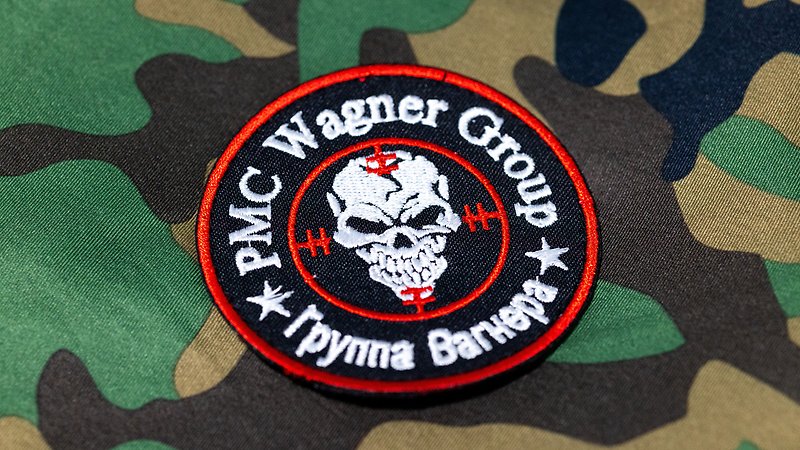
Russia’s engagement in Africa has expanded and evolved during the 2020s, particularly since the full-scale invasion of Ukraine, as the continent has become increasingly important in Russia’s competition with the West. While much attention has focused on the Wagner Group and its successor, the Africa Corps, Russia’s engagement extends beyond the paramilitary sphere. This report examines the evolution of Russia’s military and security engagement in Africa, including
paramilitary activities, conventional military cooperation, naval diplomacy, and arms transfers, and considers how these relate to Russia’s broader foreign policy goals.
Russia’s military engagement in Africa serves both long-term strategic ambitions and more opportunistic interests. It supports Moscow’s pursuit of a multipolar world order, challenges Western dominance, and reinforces Russia’s great-power status through military presence and power projection. This is particularly evident in the naval domain, where Russia seeks to restore elements of its Soviet-era maritime influence. At the same time, Russia leverages political instability and its paramilitary presence to secure pragmatic gains, including access to natural resources and ways to circumvent international sanctions.
There has been a significant expansion in formal military-security cooperation agreements. Since 2015, the number of intergovernmental agreements has risen sharply, with a strong momentum continuing into the early 2020s, bringing the total to at least 57 agreements covering 39 African states as of March 2026. While many of these agreements remain limited in practice, others have enabled deeper military engagement, including training, exercises and access to military infrastructure.
Naval engagement critical
A critical component of Russia’s military presence in Africa is its naval engagement. In the absence of permanent naval bases, Russia relies on port calls, exercises, and simplified port-entry agreements to sustain a naval presence in African waters. Reflecting this growing engagement, during the 2020-2025 period, Russian Navy vessels conducted more than 65 port calls in at least 18 African states. These activities serve both operational and diplomatic purposes by supporting extended deployments, strengthening bilateral relations, and projecting Russian influence across the continent.
Russia’s paramilitary engagement in Africa is shifting from the Wagner Group’s largely unofficial, “guns-for gold” model toward the state-controlled Africa Corps. Operating under the Ministry of Defence, the Africa Corps represents a seemingly more risk-averse model, while continuing to provide regime security and training in volatile regions. Russia maintains a primary paramilitary presence in the Central African Republic, Libya, and Mali, while also expanding into other parts of the continent, including coastal West Africa, where it seeks to establish logistical hubs and diversify its supply routes.
Total Russian arms exports to Africa have declined in the 2020s, likely due in part to the demands of the war in Ukraine, sanctions, and Western pressure on major importers. Nevertheless, Africa remains an important market for the Russian defence industry. Beyond their economic importance, arms exports also help Russia build and consolidate relationships with key partners and create long-term dependencies. Notably, countries hosting Russian paramilitary forces, such as the Wagner Group or the Africa Corps, often import Russian weapons.
Looking ahead
Russia is likely to continue to project military power in and from Africa through a range of means. With the Africa Corps under greater Kremlin control the different dimensions of Russia’s military engagement on the continent are likely to continue to become more institutionalised and interconnected. This is already visible in how these different forms of engagement support one another: naval diplomacy and port-access agreements in the Gulf of Guinea appear intended to support the logistical requirements of the Africa Corps operations in the Sahel, while continued arms exports create dependencies that facilitate both conventional military cooperation and paramilitary presence.
However, this expansion is not without challenges. Recent setbacks in Mali may signal emerging difficulties for the Africa Corps’ future expansion, and its effectiveness remains contingent upon the willingness of host governments to engage with a more formalised state actor.
Russia’s paramilitary footprint also remains geographically uneven; while it finds fertile ground in unstable contexts in the Sahel and Central Africa, its influence is more limited in more stable regions such as Southern Africa. More broadly, a critical test for Russia’s future role on the continent will be its ability to convert opportunistic, transactional ties into enduring, institutionalised partnerships.
Russia’s pursuit of maritime power in the Mediterranean and its long-standing aim to secure a foothold near the Red Sea are strategic objectives that will likely persist regardless of the specific trajectory of the Africa Corps. These efforts form part of Russia’s broader effort to advance a multipolar international order and strengthen its position as a global power, with Africa providing an important arena both for power projection and diplomatic influence.
While specific partners and short-term interests may fluctuate, maintaining and expanding military-security relationships across the continent is likely to remain an enduring feature of Russia’s global ambitions.
This text is an executive summary of the report Beyond Wagner: Russia’s military engagement in Africa in the 2020s, by FOI researcher Anna Ida Rock. Download the full report below.