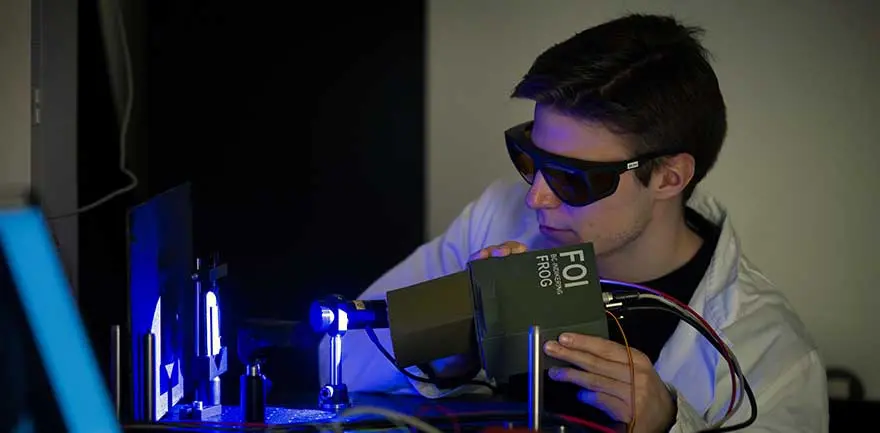
Hazard Protection and Decontamination
The Department for Hazard Protection and Decontamination develops and evaluates solutions to protect people and materiel against chemical, biological, radiological, and nuclear (CBRN) agents, and to decontaminate affected materials.
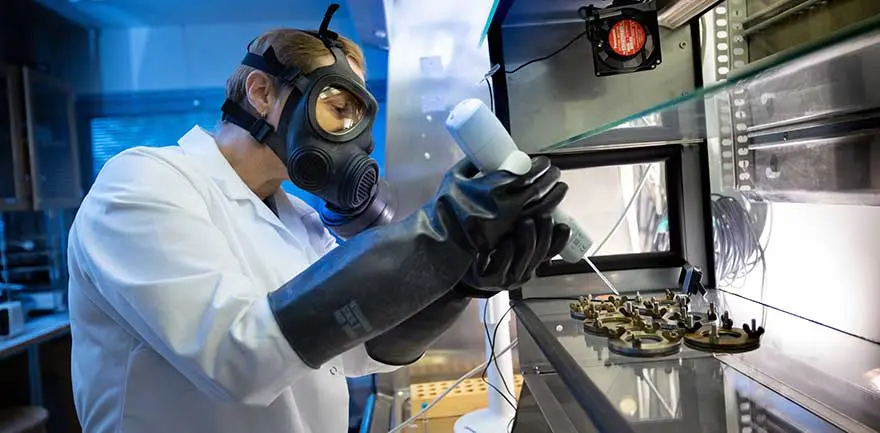
In the event of an incident involving hazardous substances, it is of the utmost importance to limit exposure. Protection may be individual, intended for a single user, or collective, where several people are protected simultaneously within a shared environment. Following such an incident, decontamination is often required to neutralise or remove hazardous substances.
The department works closely with its clients and provides expert support to understand, evaluate and assess both existing and future protection and decontamination solutions, from the material level to complete systems. The activities include both long-term research, which aims to develop new knowledge about future protection and decontamination methods, as well as applied development projects in which new methods and concepts are developed.
A central part of the work is the testing and evaluation of protective equipment and decontamination methods, both in accordance with established standards and using internally developed methods. The unit also provides training in the use of CBR protection and decontamination methods.
Individual Protection
Individual protection against CBR agents comprises respiratory protection and protective clothing against relevant gases, aerosols and liquids. The protective clothing may consist of protective suits or garments, gloves, and shoes or boots. The unit tests and evaluates all components of individual protection and conducts research on future protection concepts. A recurring theme in the long-term research is protection with lower thermal and physiological burden. The unit also provides training in the practical use of protective equipment.
Collective Protection
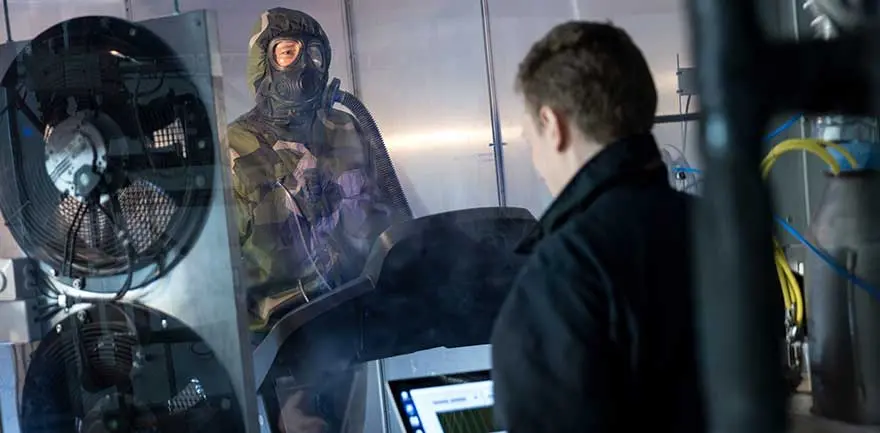
Collective protection refers to solutions that protect several people simultaneously against CBRN warfare, for example shelters, command centres, vehicles and other CBR-protected facilities. Activities include evaluation of both complete systems and individual components, such as overpressure systems, valves, doors, filters and adsorbents (e.g. activated carbon).
Decontamination
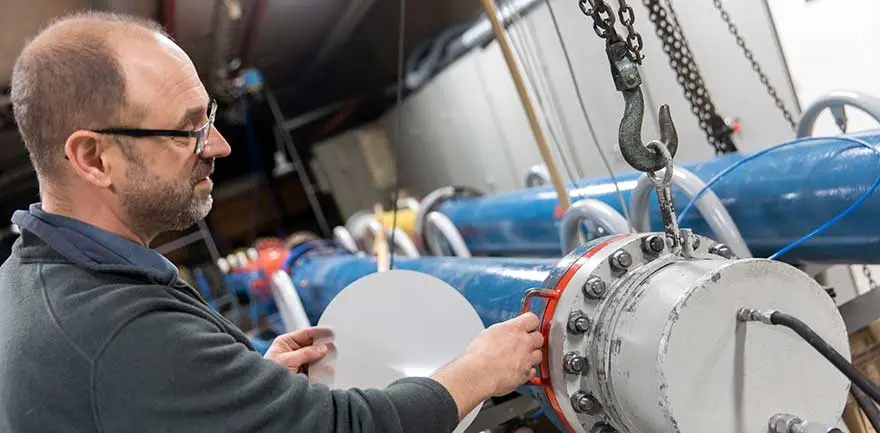
Within the field of decontamination, the unit carries out tests and evaluations of methods and agents for removing and neutralising or inactivation of hazardous substances, and studies how different materials can be decontaminated effectively. The unit also conducts research on rapid methods for assessing decontamination needs, and investigates the potential for integrating self-decontaminating materials into protective barriers.